
Categories
Spring GardeningPublished March 1, 2026
Grow With Intention: Why Triangle Gardeners Are Doing Things Differently This Spring

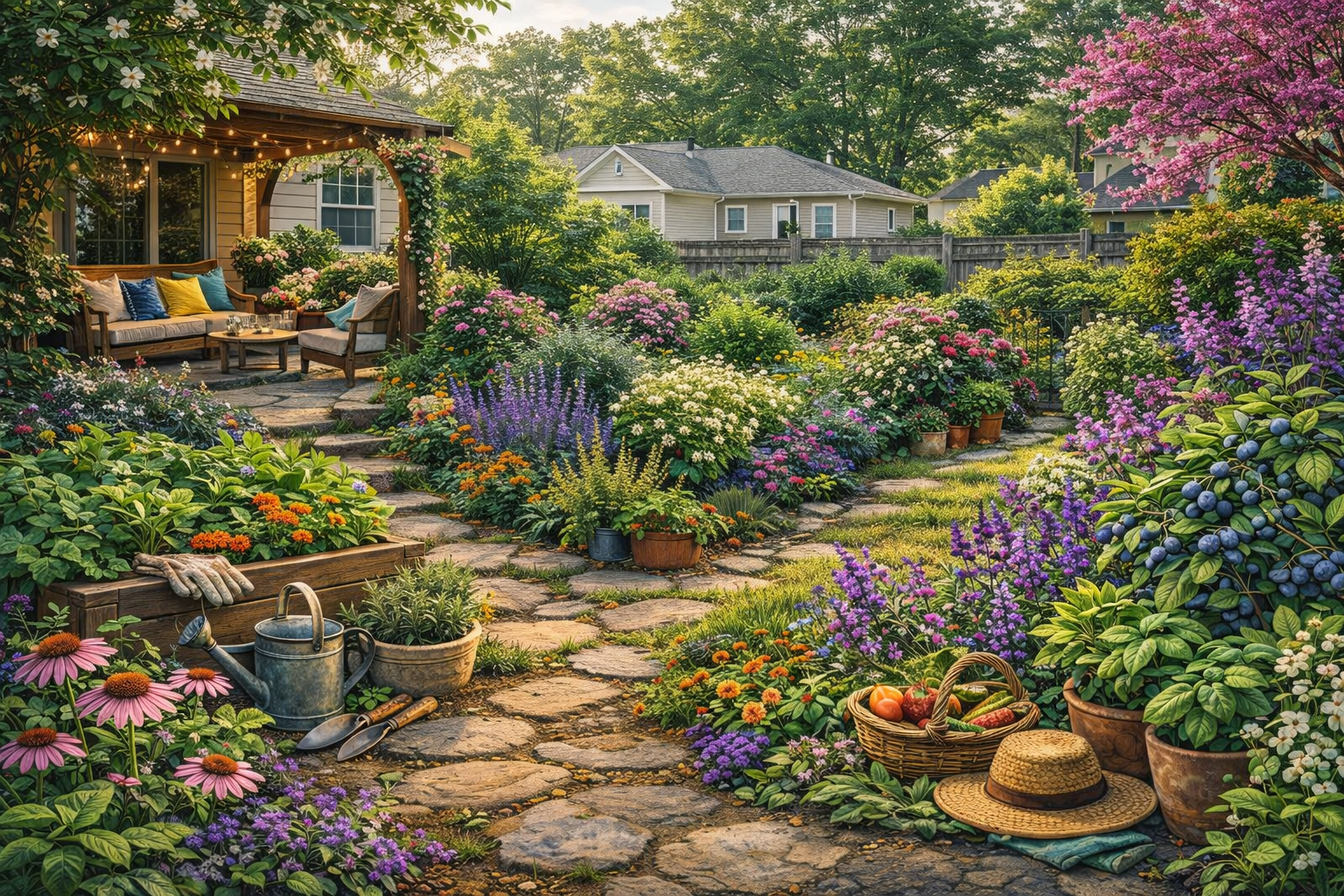
There's something in the air here in the Triangle this spring, and I don't just mean the pollen. (Though — yes, obviously, that too. Welcome to North Carolina.)
What I'm really noticing is a shift in the way people are thinking about their outdoor spaces. Not just what to plant, but why. Not just how to make a yard look good, but how to make it feel like something. There's a word that keeps coming up in conversations I'm having with homeowners, designers, and garden enthusiasts all across the Raleigh-Durham area — and that word is intention.
It sounds simple, but it's actually a pretty meaningful departure from the way a lot of us have approached our yards for years.
From "Good Enough" to "This Is Exactly What I Wanted"
For a long time, the standard approach to landscaping was essentially reactive. You planted what looked nice at the nursery, watered when things started to look sad, and hoped for the best. And honestly? That worked fine — until the summers started getting hotter, the dry spells started stretching longer, and that perfectly reasonable yard started feeling like a second job.
Triangle homeowners are done with that cycle, and Spring 2026 is where that collective decision is really showing up. What's replacing the old approach isn't necessarily more complicated — in a lot of ways, it's actually more relaxed. It's just smarter. It's choosing plants that genuinely belong here, designing spaces that support the way you actually live, and letting the landscape do the heavy lifting instead of fighting it every step of the way.
That's what intentional gardening looks like. And in our corner of North Carolina, it is having a real moment.
The Plants That Belong Here Are Having Their Spotlight
If you've been paying attention to what's going up in Triangle front yards and garden beds lately, you've probably noticed more native plants making their way into spaces that used to be dominated by whatever was on sale at the big box store. That's not an accident — it's a direct response to what our climate has been asking of us.
Echinacea, Salvia, Catmint — these aren't trendy for the sake of being trendy. They're plants that evolved for conditions a lot like ours: hot summers, periodic dry spells, clay-heavy soil. When you put the right plant in the right place, something interesting happens. You stop managing it and start just... enjoying it.
The native trees are part of this story too. Dogwood, Redbud, Serviceberry — they've been here long before any of us, and they know how to handle a Triangle spring better than anything we could import. A mature Redbud in full bloom in late March is one of those genuinely breathtaking things about living in this part of North Carolina, and more homeowners are choosing to plant them intentionally rather than hoping to inherit one from a previous owner.
The pollinators notice, by the way. A yard full of plants like these becomes a whole little ecosystem, and there's something deeply satisfying about that.
Your Yard Can Feed You — and Look Amazing Doing It
One of my favorite conversations to have right now is about foodscaping, which is exactly what it sounds like: weaving edible plants into your ornamental beds so that the garden is both beautiful and useful at the same time.
We're not talking about a vegetable garden tucked behind a fence somewhere. We're talking about blueberry bushes serving as hedging shrubs along a walkway. Rosemary spilling over the edges of a raised bed next to ornamental grasses. Rainbow chard and kale — which are genuinely stunning plants when you actually look at them — growing right alongside jewel-toned flowers in deep purples and burgundies.
The "foodscape" approach reflects something bigger about how Triangle homeowners are thinking about their properties right now. Function and beauty don't have to be separate conversations. They never really did.
The Colors of 2026 Are Not Playing It Safe
Speaking of jewel tones — if there is one aesthetic shift that surprised me a little when I started noticing it, it's the move away from muted, neutral palettes toward something much richer and bolder. Deep plums. Lush burgundies. Saturated emerald greens layered against each other in ways that feel almost like a painting.
Coral Bells and the 2026 Plant of the Year — Vernonia lettermannii 'Iron Butterfly' — are two plants that are absolutely delivering on that promise without demanding much in return. They're the kind of plants that look like you really committed to your garden vision even when the truth is they're doing most of the work themselves.
There's a certain confidence in going bold outdoors, and it reads beautifully in the Triangle landscape, where the light and the greenery already provide such a lush natural backdrop.
The "Sunday Garden" Is Everything
If I had to pick the trend that resonates most with the homeowners I talk to every day, it's what designers are calling the Sunday Garden aesthetic — and the name says everything you need to know.
It's a space that looks beautifully curated, quietly impressive, and genuinely cared for. But it's designed so that one relaxed Sunday afternoon of puttering keeps it looking that way all week. Structured evergreens like boxwoods and yews give the garden its shape and year-round presence. Then softer, more romantic plants — hydrangeas, fragrant gardenias, camellias putting on a show in late winter and early spring — layer in against that structure and create something that feels both polished and a little dreamy.
It's low-maintenance in the best possible way, because the design itself is doing the work. And for anyone who has ever felt a little guilty about how much (or how little) attention their yard gets, this approach is genuinely freeing.
Patios, Containers, and the Outdoor Room Moment
The Triangle has always had the climate for outdoor living — long springs, warm evenings that stretch well into fall — and Spring 2026 is the season where a lot of homeowners are finally leaning all the way into that reality. Container gardening on decks and patios has taken on a whole new energy, with large pots filled with cascading ferns, fragrant climbing jasmine, and camellias turning ordinary concrete squares into spaces that feel like actual rooms.
It's a small shift in thinking with a big payoff. When you start seeing your patio as an extension of your home rather than just the space between your door and your yard, everything about how you design and plant it changes.
And honestly? Those spaces feel incredible to live in.
Denser Is Better — The End of Empty Soil
One more idea that's woven through almost every 2026 landscape conversation: stop leaving space. The old instinct to give plants room to breathe has given way to something more naturalistic — layered, dense, full plantings where groundcovers like Sedum and Ajuga fill in beneath taller perennials, where every inch has something intentional growing in it.
The practical reasons are real: denser planting retains moisture, crowds out weeds, and reduces the maintenance that comes from bare soil drying out. But the aesthetic reason is equally compelling. A full, layered garden just looks alive in a way that a sparse one never quite does.
A Note on Timing, Because March Comes Fast
For anyone thinking about making moves in the garden this spring — early to mid-March is your window for getting cool-season crops like kale and carrots in the ground and starting tomatoes and peppers indoors. By late March into April, once that last frost risk has passed, it's time for perennial shrubs, azaleas, and hydrangeas. And by May, you're into full heat-tolerant annual territory — zinnias, sunflowers, all the summer color you could want.
The Triangle's growing season is genuinely one of the gifts of living here. It rewards people who pay attention to it.
Here's What I Keep Coming Back To
I talk about homes for a living, and outdoor spaces have always been part of that conversation — but the quality of that conversation has changed lately. People aren't just asking what will increase their home's value or photograph well for a listing. They're asking what will make them feel connected to where they live. What will make coming home feel like arriving somewhere that was designed for them.
That's intention. And when you see it in a landscape — the right plants, thoughtfully placed, designed around how a family actually uses their outdoor space — you feel it immediately.
It's one of my favorite things about springtime in the Triangle. Everything is possible, everything is blooming, and this year, more homeowners than ever are approaching that possibility with a real sense of purpose.
If you ever want to talk about what that means for your home — whether you're thinking about the market or just thinking about your backyard — I'm always up for that conversation. It's one of the good ones.
Happy Spring, Triangle. Go make something beautiful out there. 🌿

Masha Halpern
| Masha Halpern Boutique Real Estate | Keller Williams Elite Realty
or another way