
Published January 27, 2025
The Hidden Dangers of Public USB Charging & What You as a Traveler Need to Know!

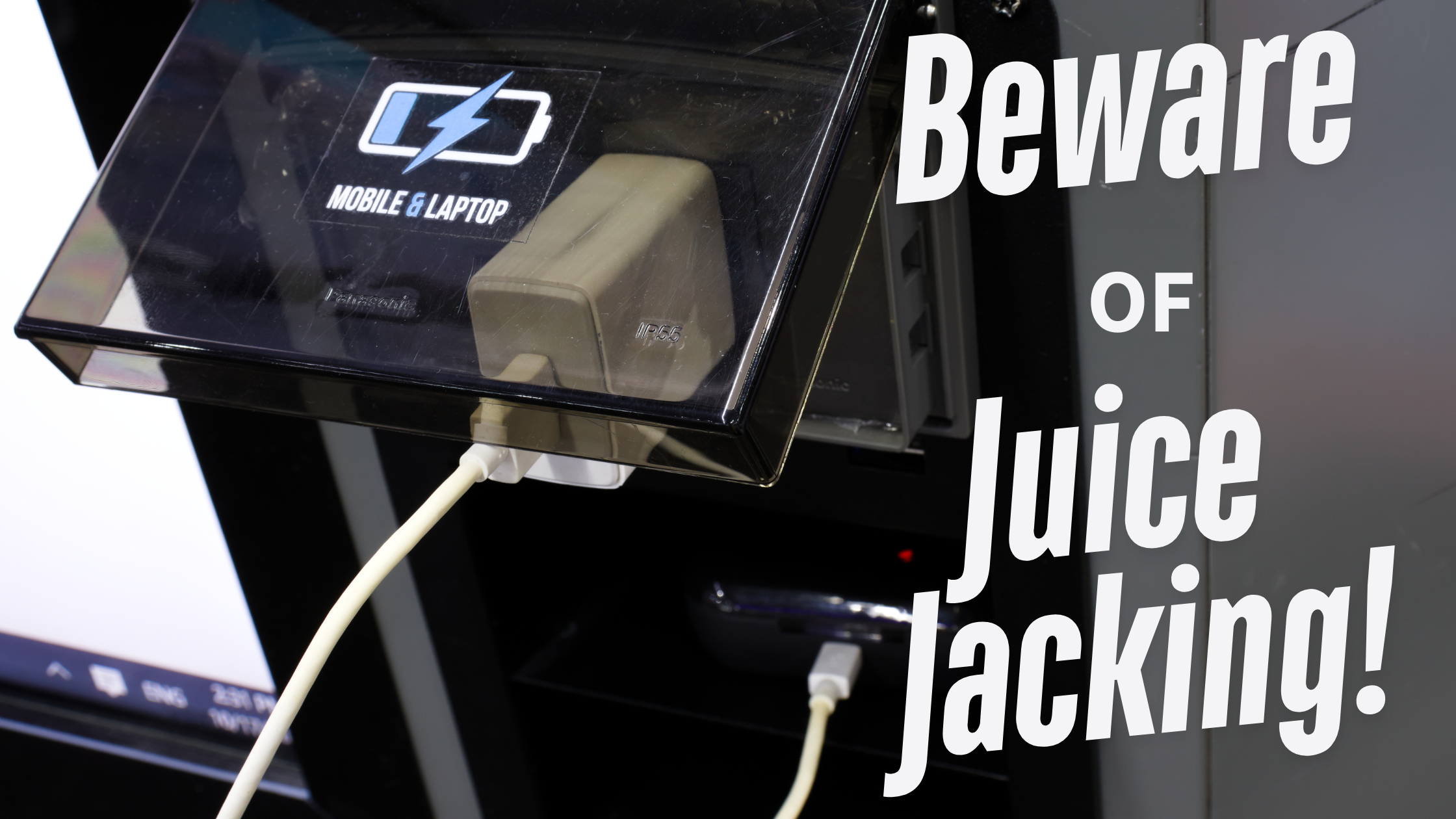

Imagine you're at the airport, your phone battery is at 5%, and that conveniently placed charging station is calling your name. But before you plug in, here's why you should think twice.
The Rising Threat of Juice Jacking In recent years, cybercriminals have become increasingly sophisticated in their methods of data theft. The FBI and the FTC have issued multiple warnings about "juice jacking," a cyber attack where hackers modify public USB charging stations to steal sensitive data or install malware on connected devices.
How Juice Jacking Works When you plug your phone into a USB port, it's not just charging – it's also capable of transferring data. Cybercriminals exploit this by:
- Installing data-skimming malware in charging stations
- Creating fake charging stations in high-traffic areas
- Modifying existing legitimate charging ports
The Numbers Tell the Story According to cybersecurity experts, a compromised charging station can steal your data in under one minute. Recent studies have shown that:
- Over 75% of travelers have used public USB charging stations
- The average smartphone contains sensitive data from at least 8 different apps
- Identity theft from cyber-attacks has increased by 45% since 2020
Protecting Yourself While Traveling The safest solution is remarkably simple: travel with your portable charger or wall adapter. Other effective strategies include:
- Using power-only USB cables (without data transfer capabilities)
- Carrying a portable power bank
- Using AC outlets instead of USB ports
- Keeping your device's software updated
Remember: that few minutes of charging could cost you hours of dealing with compromised accounts or stolen identity. Pack your charger, protect your data, and travel with confidence.

Masha Halpern
| Masha Halpern Boutique Real Estate | Keller Williams Elite Realty
or another way