
Categories
Spring GardeningPublished March 24, 2026
Add a Little Spring to Your Step April Gardening Tips for Chapel Hill & the Triangle

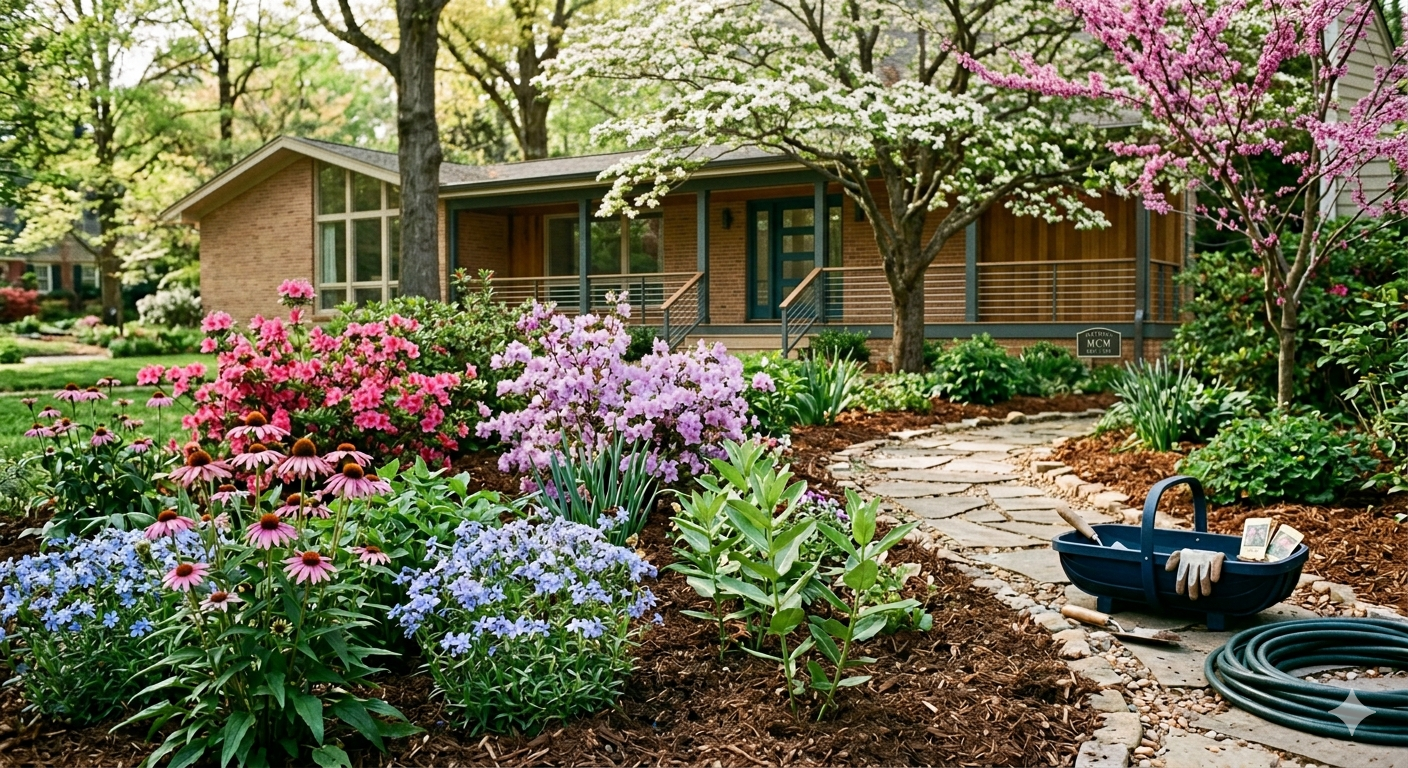
April in Chapel Hill is its own kind of magic. The redbuds do their thing. The dogwoods follow. And suddenly your yard — the one you've been side-eyeing since February — is asking for a little attention. The good news is that you don't have to overthink it. Spring here has a rhythm, and once you tune into it, it almost tells you what to do.
This isn't a lecture on horticulture. Think of it more as a friendly nudge from someone who's spent a lot of time watching what works — and what doesn't — in Central North Carolina yards. A few intentional moves in April can make your outdoor space feel like an entirely different place by summer.
Your Yard Has Been Waiting All Winter
There's something quietly exciting about April in the garden — it's the moment everything that's been dormant starts making its case again. Before you dive into planting mode, a little reset goes a long way. Think of it less as chores and more as clearing the stage before the show.
✦ Lay down fresh mulch. Pine straw or hardwood mulch — a couple of inches — is one of the kindest things you can do for your beds before summer heat arrives. It holds moisture, keeps weeds guessing, and honestly just makes everything look like someone lives here intentionally.
✦ Let the spring bloomers have their moment. If you've been itching to prune, wait until your azaleas and other spring-flowering shrubs have finished their show. Prune too early and you've essentially cut off the best part of the performance.
✦ Walk your irrigation. A ten-minute check of your soaker hoses and drip lines now will save you a lot of grief when summer arrives and consistent watering stops being optional.
The Frost Is Gone — Now What?
Mid-April is Chapel Hill's last-frost marker, and it's a real turning point in the garden calendar. Once you've cleared that date, warm-season plants — your tomatoes, peppers, eggplants — are finally ready to go in the ground without the risk of a cold snap undoing all your enthusiasm.
It's also prime time to add native ornamentals like Coneflowers, Phlox, or Milkweed. They're the kind of plants that look gorgeous and actually give something back — pollinators absolutely love them, and they've been making their case in Triangle gardens for good reason.
Plant Like You Live Here
Here's the perspective shift that changes everything: stop trying to force plants that want to be somewhere else. Chapel Hill's climate is humid, warm, and occasionally aggressive — and the plants that thrive here are the ones that were built for exactly that.
Carolina Yellow Jessamine, Pink Muhly Grass, native grasses that move in the breeze — these aren't just beautiful, they're resilient. Drought-tolerant. Deer-resistant (a very real concern in these neighborhoods). Low-maintenance once they're established. Choosing plants that belong here isn't settling — it's smart, and it shows.
The Real Secret? Just Start.
April moves fast. The window between the last frost and the first real heat wave is shorter than any of us would like, and the yards that look effortlessly lush in July are usually the ones where someone showed up in April and did a few things right. It doesn't have to be complicated — a bag of mulch, a couple of native perennials, a pass through the irrigation. Small moves, big difference.
And if spring has you thinking about more than just the garden — maybe what a different yard, a different neighborhood, or a different home could look like — I'm always happy to talk through what's happening in Chapel Hill right now. This market, like April itself, has a lot going on.
— Tips informed by NC State Extension & Chapel Hill landscaping professionals | Spring 2026

Masha Halpern
| Masha Halpern Boutique Real Estate | Keller Williams Elite Realty
or another way